
The Human Photonics Laboratory (HPL) works to advance the frontier of optical technology in the areas of human performance, cancer detection, and treatment. The HPL has historical ties with the Human Interface Technology Lab at the University of Washington where the ideas for the immersive VR pain distraction, scanning fiber endoscope, and the optical projection tomographic microscope originated. Read More
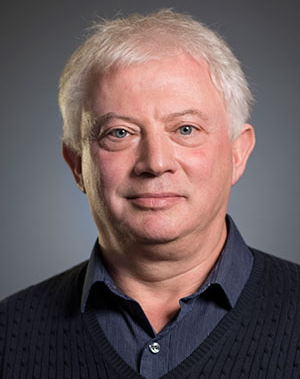
Dr. Korshin’s research interests include corrosion and metal release in drinking water, environmental electrochemistry, advanced oxidation processes, development of new approaches to quantify and model the degradation of pharmaceuticals and other trace-level organic contaminants in wastewater, characterization of natural organic matter and its reactions with halogens, on-line methods to monitor drinking water quality and environmental chemistry of radionuclides. He has published almost a hundred refereed publications, many of them in leading journals such as Water Research and Environmental Science & Technology. Read More

Our lab is developing molecular agents and systems for photoacoustic and ultrasonic molecular imaging. Also, we look at integrated therapeutics for molecular-level theransotics (i.e., integrated diangostics and therapy). Read More

MolES-related research interests: Molecular design and engineering through application of machine learning and Data Science methodologies. Bioprospecting for new molecules and industrial microbes.
MolES-related education interests: Data Science, scientific software design & engineering, reproducible computational research. Read More

The Berndt lab develops fluorescent biosensors for optogenetic approaches by utilizing structure guided and high throughput protein engineering. We aim to detect the activity of neurotransmitter, neuromodulators, hormones, ions and intracellular signaling molecules in life tissue and behaving animals. These sensors will provide multidimensional real time information of the current state of neurons and neuronal networks. Our goal is to identify impaired network dynamics in rodent models for neurological disorders. However, these protein tools are universally applicable and we seek to expand applications into other cell types such as cardiac, pancreatic and stem cells. Read More

We harness our understanding of organic chemistry, polymer chemistry, and supramolecular chemistry to design stimuli-responsive materials for life science applications. Our current focus areas include polymer-living cell composite materials (also known living materials) and polymers to create anatomical models for human tissue. Our approach is to utilize the stimuli-responsive behavior of the materials to facilitate their fabrication or patterning. We are an interdisciplinary team of researchers, and our methods include polymer synthesis, rheological characterization, culturing microbes, and 3D printing. Read More

Our group aims to understand and control the enzyme families involved in intracellular signal transduction. The final goal of these studies is to identify new molecular targets for the treatment of human disease. We integrate techniques from organic chemistry, biochemistry, protein engineering, proteomics, and cell biology to develop new tools that provide a greater understanding of diverse signaling processes. Our technological innovations seek to address the limitations of currently existing methods for studying these highly dynamic cellular events. Furthermore, we are using these tools to answer a number of fundamental questions in biology. Read More

The Maibaum Group uses the tools of computational modeling and statistical mechanics to understand mechanisms of biophysical processes and to design novel biomimetic materials. One focus of our work is the emergent spatial organization of cellular membranes and their response to external stimuli such as bending or protein binding. Another recent example is the incorporation of azobenzene groups into DNA, which allows control over DNA hybridization and opens a new route towards designing photo-responsive materials. Read More
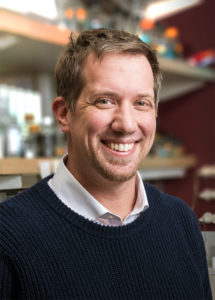
My laboratory aims to decipher and manipulate the molecular mechanisms by which mammalian cells establish and utilize higher-order chromatin structures, with an emphasis on the interplay between noncoding RNAs (ncRNAs) and nuclear architecture. Towards this end, we are developing a suite of novel technologies for probing and exploiting ncRNA function in situ, including methods for targeting artificial ncRNA devices to chromatin. Combined with an array of biochemical, genomic, and chemical biological techniques, we aim to elucidate the mechanisms by which ncRNAs influence nuclear organization at all levels. Read More

Our lab focuses on the structural analyses of glycoproteins and carbohydrate – protein interactions. We also develop new technologies for characterization and tracking of carbohydrates by mass spectrometry that sometimes includes instrument modification and software development. Read More