Bioengineers have cleared a major hurdle on the path to 3D printing replacement organs with a breakthrough technique for bioprinting tissues. A research team led by MolES faculty member Kelly Stevens, assistant professor of bioengineering and investigator at the UW Medicine Institute for Stem Cell and Regenerative Medicine, has created exquisitely entangled vascular networks that mimic the body's natural passageways for blood, air, lymph and other vital fluids. The team published its findings May 3 in the journal Science. Their research was also featured in Newsweek, Forbes, among other outlets.
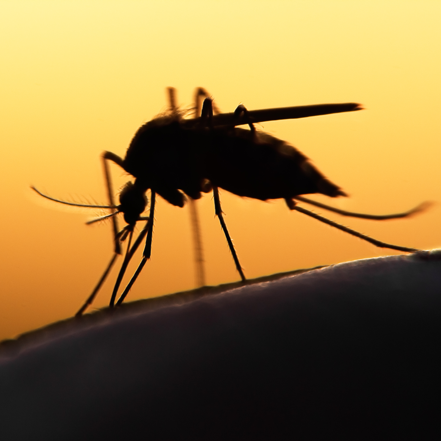
A research team led by University of Washington (UW) Distinguished Career Professor of Bioengineering and Molecular Engineering & Sciences (MolES) Institute Director Patrick Stayton has received a grant from the Bill & Melinda Gates Foundation to develop a new therapeutic for the radical cure (prevention of relapse) of malaria.
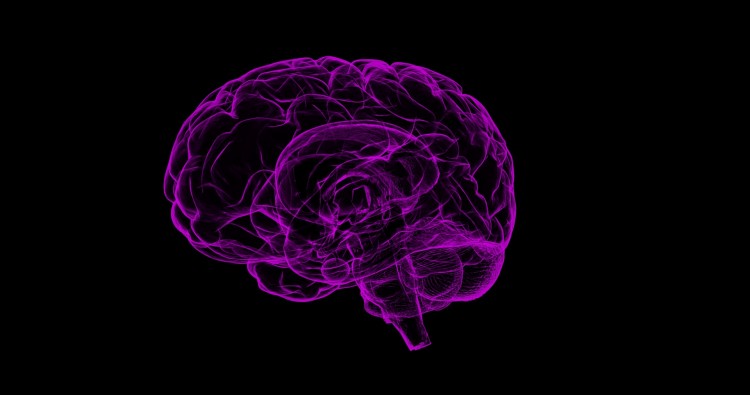
A team led by MolES faculty member and bioengineering Professor Valerie Daggett has developed synthetic peptides that target and inhibit the small, toxic protein aggregates that are thought to trigger Alzheimer's disease. Dylan Shea, a molecular engineering PhD student in the Daggett lab, was the lead author on a new paper describing these findings, published April 19 in the Proceedings of the National Academy of Sciences.
A research team at the University of Washington, including MolES faculty member Nathan Sniadecki, an associate professor in the Department of Mechanical Engineering, has created a novel system that can measure platelet function within two minutes and can help doctors determine which trauma patients might need a blood transfusion upon being admitted to a hospital. The team published its results March 13 in Nature Communications.
A recent publication from the Institute for Protein Design, located in the MolES building, describes a nanoparticle platform developed for a respiratory syncytial virus study that will also be applied to vaccine research on flu, HIV, and more. Seattle startup Icosavax will advance related clinical trials.
Future technologies based on the principles of quantum mechanics could revolutionize information technology. But to realize the devices of tomorrow, today's physicists must develop precise and reliable platforms to trap and manipulate quantum-mechanical particles. In a paper published Feb. 25 in the journal Nature, a team of physicists led by MolES faculty member Xiaodong Xu, a Boeing Distinguished Professor of both physics and materials science and engineering, reports the development of a new system to trap individual excitons.
Three teams led by University of Washington researchers have received competitive awards totaling more than $2.3 million from the U.S. Department of Energy Solar Energy Technologies Office for projects that will advance research and development in photovoltaic materials, which are an essential component of solar cells and impact the amount of sunlight that is converted into electricity. Two of the UW teams are led by MolES faculty members Scott Dunham, a professor of electrical and computer engineering and Hugh Hillhouse, a professor of chemical engineering.
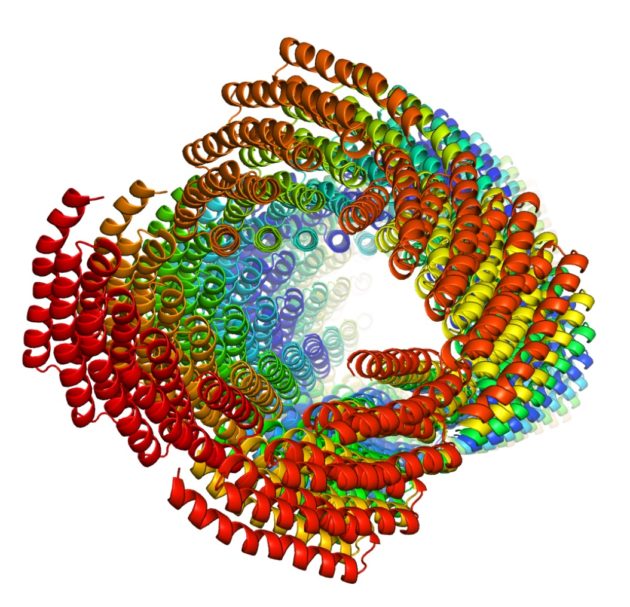
Hao Shen, a molecular engineering PhD candidate in the lab of biochemistry Professor David Baker, was a lead author of a study published in Science describing the creation of self-assembling protein filaments from scratch. The filaments were built from identical protein subunits that snap together spontaneously to form long, helical, thread-like structures which could be used to create new materials for a range of applications, from diagnostics to nano-electronics. Learn more in a related Geekwire story!
In a paper published Feb. 9 in Science Advances, scientists at the University of Washington announced that they have successfully combined two different imaging methods "” a type of lens designed for nanoscale interaction with lightwaves, along with robust computational processing "” to create full-color images.
University of Washington researchers have developed a fast, inexpensive method to make electrodes for supercapacitors, with applications in electric cars, wireless telecommunications and high-powered lasers.