
The funding will be used to develop scalable, cell-free platforms that enable the capture and conversion of carbon dioxide into industrial chemicals, providing manufacturers with a cheaper, more efficient and sustainable means of chemical production.
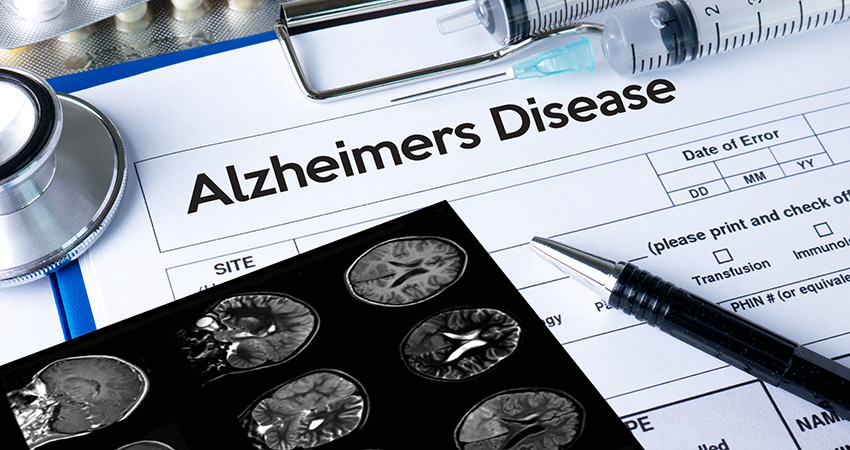
Bioengineering startup AltPep advances technology for the early detection and treatment of Alzheimer's and other amyloid diseases.

In a study published in Nature Chemistry, a research team led by MolES faculty member Munira Khalil, professor and chair of chemistry at the UW, has captured the rapid motions of solvent molecules that impact light-driven electron transfer in a molecular complex for the first time. This information could help researchers learn how to control energy flow in molecules, potentially leading to more efficient clean energy sources.
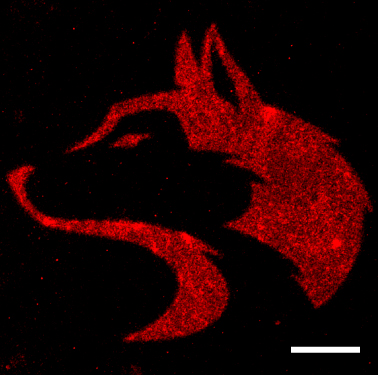
MolES faculty member Cole DeForest and colleagues have developed a technique to modify naturally occurring biological polymers with protein-based biochemical messages that affect cell behavior. Their approach, published in the Proceedings of the National Academy of Sciences, uses a near-infrared laser to trigger chemical adhesion of protein messages to a scaffold made from biological polymers such as collagen, a connective tissue found throughout our bodies.
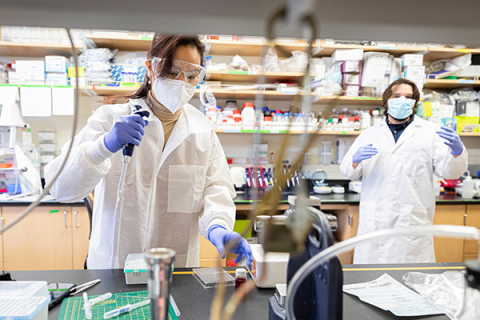
MolES faculty members Barry Lutz and Paul Yager pivoted their diagnostics research to support the need for COVID-19 testing.
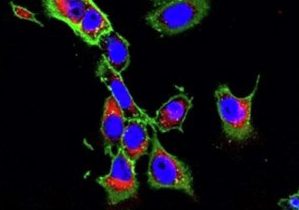
A University of Washington team led by Miqin Zhang, a MolES faculty member and professor of materials science and engineering, has developed a nanoparticle-based drug delivery system that can ferry a potent anti-cancer drug through the bloodstream safely. Their nanoparticle is derived from chitin, a natural and organic polymer that, among other things, makes up the outer shells of shrimp.
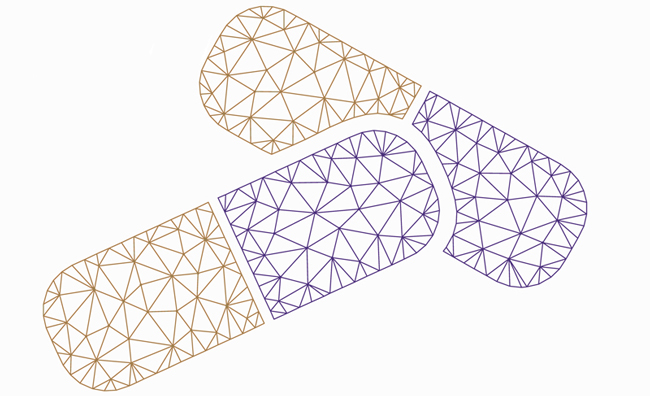
Advances in synthetic biology and biomaterials are opening up exciting prospects for the distributed manufacturing of drugs, food products, and other commodities.
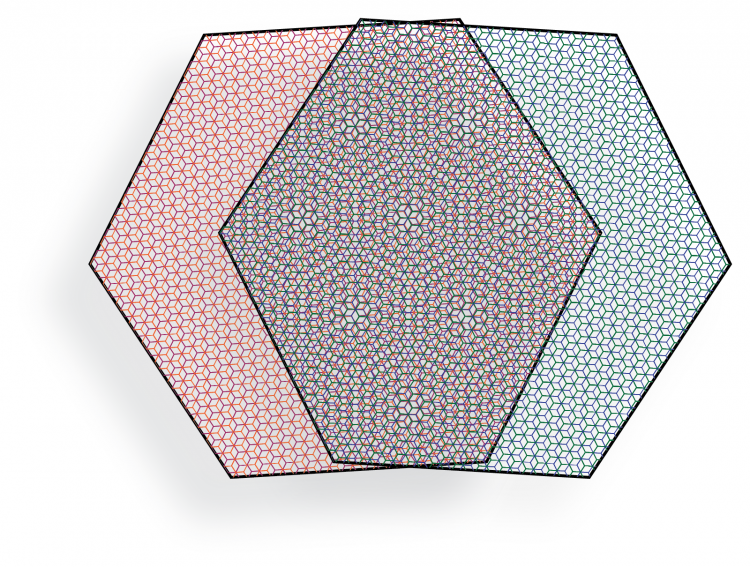
In a paper published Sept. 14 in the journal Nature Physics, a team led by the University of Washington reports that carefully constructed stacks of graphene "” a 2D form of carbon "” can exhibit highly correlated electron properties. The team also found evidence that this type of collective behavior likely relates to the emergence of exotic magnetic states.
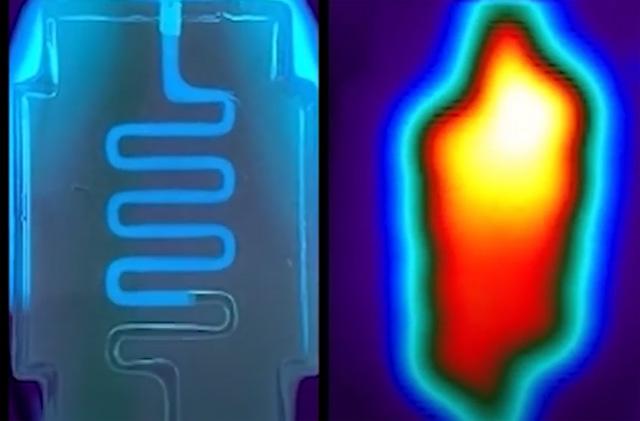
Bioengineering professor Kelly Stevens and colleagues created a new tool to control gene expression in 3D-printed genetically-engineering cells using heat.
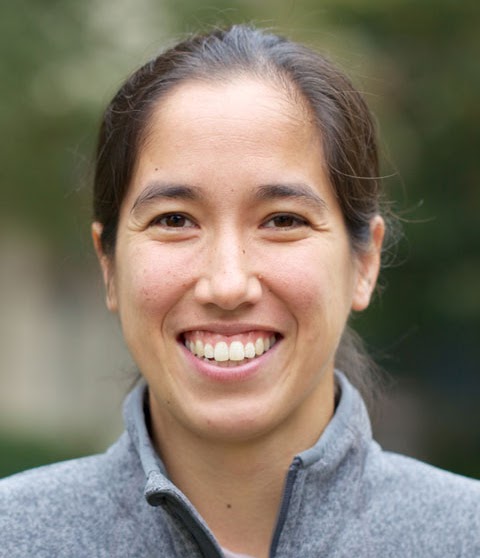
The National Science Foundation has awarded $3 million to establish a NSF Research Traineeship at the University of Washington for graduate students in quantum information science and technology. The new traineeship "” known as Accelerating Quantum-Enabled Technologies, or AQET "” will make the UW one of just "a handful" of universities with a formal, interdisciplinary QIST curriculum. MolES faculty member Kai-Mei Fu will serve as the director of AQET.